地图 - 热线
15392885678
地图 - 热线
- 服务热线 - 15392885678 15069779222
沸石转轮+CO协同治理:双单元联动,破解复合废气达标难题
Zeolite wheel+CO collaborative treatment: dual unit linkage, solving the problem of meeting the standard of composite waste gas
在工业废气治理领域,复合废气(含有机废气与无机有毒气体)的同步达标处理一直是行业痛点,而沸石转轮+CO协同治理系统的出现,通过吸附浓缩与定向氧化的分工协作,实现了两类有毒污染物的高效同步治理,成为工业环保治理中的核心解决方案。很多人会疑惑,沸石转轮与CO氧化装置如何协同工作?二者分工明确又相互配合的核心逻辑是什么?为何能实现双污染物同步达标?今天,我们就结合其工作原理、核心流程与技术优势,详细解读这套协同治理系统,兼顾专业度与通俗性,帮大家彻底搞懂沸石转轮+CO协同治理的核心奥秘,规避认知误区。
In the field of industrial waste gas treatment, the synchronous standard treatment of composite waste gas (including organic waste gas and inorganic toxic gases) has always been a pain point in the industry. The emergence of the zeolite wheel+CO collaborative treatment system has achieved efficient synchronous treatment of two types of toxic pollutants through the division of labor and cooperation between adsorption concentration and directional oxidation, becoming the core solution in industrial environmental protection treatment. Many people may wonder how the zeolite wheel and CO oxidation device work together? What is the core logic of clear division of labor and mutual cooperation between the two? Why can we achieve synchronous compliance of dual pollutants? Today, we will provide a detailed interpretation of this collaborative governance system based on its working principles, core processes, and technological advantages, balancing professionalism and accessibility, to help everyone thoroughly understand the core secrets of zeolite wheel+CO collaborative governance and avoid cognitive misunderstandings.
沸石转轮+CO协同治理系统,核心是由沸石转轮吸附浓缩单元与CO氧化分解单元组成,二者各司其职、协同发力,打破了单一治理设备难以同步处理多类污染物的局限,其核心优势在于“吸附分离+定向转化”的双机制,既能实现有机废气的减量浓缩,又能完成一氧化碳(CO)的无害化分解,最终实现复合废气的同步达标排放。这套系统并非简单的设备拼接,而是通过工艺优化,让两个单元的运行参数相互适配,最大化提升治理效率、降低能耗。
The zeolite wheel+CO collaborative treatment system is composed of a zeolite wheel adsorption and concentration unit and a CO oxidation and decomposition unit, each of which plays its own role and works together to break the limitations of single treatment equipment in synchronously treating multiple types of pollutants. Its core advantage lies in the dual mechanism of "adsorption separation+directional conversion", which can achieve the reduction and concentration of organic waste gas, as well as the harmless decomposition of carbon monoxide (CO), ultimately achieving synchronous and standard emissions of composite waste gas. This system is not simply equipment splicing, but through process optimization, the operating parameters of the two units are adapted to each other, maximizing governance efficiency and reducing energy consumption.
先来看沸石转轮单元的核心作用——废气吸附与浓缩,这是整个协同治理系统的“预处理环节”,主要负责分离有机废气与CO,同时实现有机废气的减量浓缩。沸石转轮内部填充了高比表面积的沸石吸附材料,这类材料具有极强的选择性吸附能力,当含甲苯、乙酸乙酯等有机废气与CO的复合废气进入转轮吸附区时,沸石会选择性吸附有机废气分子,而CO因分子结构特性,无法被沸石吸附,会随净化后的气流直接进入后续的CO氧化装置。
Let's first take a look at the core function of the zeolite rotary unit - waste gas adsorption and concentration. This is the "pretreatment link" of the entire collaborative treatment system, mainly responsible for separating organic waste gas from CO, while achieving reduction and concentration of organic waste gas. The interior of the zeolite wheel is filled with zeolite adsorbent materials with high specific surface area, which have extremely strong selective adsorption ability. When the composite exhaust gas containing toluene, ethyl acetate and CO enters the adsorption zone of the wheel, zeolite will selectively adsorb organic waste gas molecules, while CO cannot be adsorbed by zeolite due to its molecular structure characteristics and will directly enter the subsequent CO oxidation device with the purified airflow.
这种选择性分离设计,有效避免了有机废气与CO在后续氧化环节竞争反应活性,确保两类污染物的治理效率均不打折。吸附饱和后的沸石转轮,会进入脱附区,通过200℃左右的热风对吸附的有机废气进行解析,将原本大风量、低浓度的有机废气,转化为小风量、高浓度的浓缩废气,这类浓缩废气会单独进入废气氧化单元进行深度处理;完成脱附后的转轮,会进入冷却区,通过冷空气降温,快速恢复吸附能力,确保整个系统能够连续、稳定运行,满足工业连续生产的废气治理需求。
This selective separation design effectively avoids the competition for reaction activity between organic waste gas and CO in the subsequent oxidation process, ensuring that the treatment efficiency of both types of pollutants is not compromised. After adsorption saturation, the zeolite wheel will enter the desorption zone, and the adsorbed organic waste gas will be analyzed by hot air at around 200 ℃. The original high air volume and low concentration organic waste gas will be converted into low air volume and high concentration concentrated waste gas, which will enter the waste gas oxidation unit separately for deep treatment; After detachment, the rotating wheel will enter the cooling zone and be cooled by cold air to quickly restore its adsorption capacity, ensuring the continuous and stable operation of the entire system and meeting the waste gas treatment needs of industrial continuous production.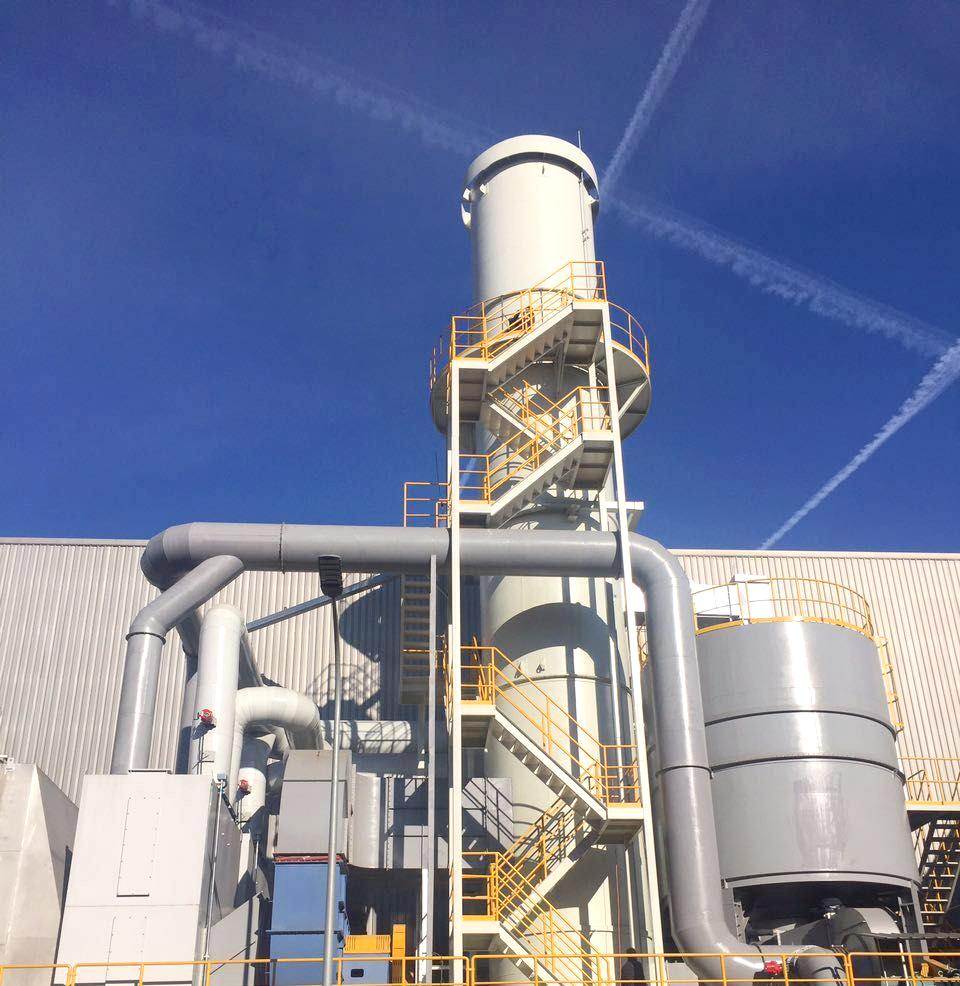
再来看CO氧化装置的核心作用——定向分解无机有毒气体,这是协同治理系统的“深度处理环节”,专门负责分解经沸石转轮分离后的CO。CO作为一种无机有毒气体,直接排放会对环境与人体健康造成危害,而CO氧化装置通过两种主流技术,实现其无害化转化,且两种技术可根据CO浓度灵活选择。
Let's take a look at the core function of the CO oxidation device - directional decomposition of inorganic toxic gases. This is the "deep treatment link" of the collaborative governance system, specifically responsible for decomposing CO separated by zeolite wheels. As an inorganic toxic gas, direct emission of CO can cause harm to the environment and human health. The CO oxidation device achieves its harmless transformation through two mainstream technologies, and the two technologies can be flexibly selected according to CO concentration.
其中,催化氧化法是应用最广泛的主流技术,在200~350℃的温度条件下,借助专用催化剂的作用,让CO与氧气发生氧化反应,最终转化为无害的二氧化碳(CO?),氧化效率可达98%以上。值得注意的是,该技术的反应温度与沸石转轮的脱附温度接近,可复用脱附环节产生的余热,有效降低系统整体能耗,实现节能与治理的双重效益。
Among them, catalytic oxidation is the most widely used mainstream technology. Under temperature conditions of 200-350 ℃, with the help of specialized catalysts, CO and oxygen undergo oxidation reactions, ultimately converting into harmless carbon dioxide (CO ?), with an oxidation efficiency of over 98%. It is worth noting that the reaction temperature of this technology is close to the desorption temperature of the zeolite wheel, which can reuse the waste heat generated in the desorption process, effectively reducing the overall energy consumption of the system and achieving dual benefits of energy conservation and treatment.
另一种则是热力氧化法,适用于CO浓度较高的场景(当CO浓度大于5000毫克/立方米时)。该方法利用CO自身的氧化放热特性,在600℃左右的高温下,让CO实现自维持燃烧,无需额外添加燃料,仅需补充少量空气,即可将CO彻底氧化分解为CO?,既降低了运行成本,又能实现高效治理,适配高浓度CO废气的处理需求。
Another method is thermal oxidation, which is suitable for scenarios with high CO concentration (when the CO concentration is greater than 5000 milligrams per cubic meter). This method utilizes the oxidation heat release characteristics of CO itself to achieve self-sustaining combustion of CO at high temperatures around 600 ℃, without the need for additional fuel. Only a small amount of air needs to be added to completely oxidize and decompose CO into CO ?, which not only reduces operating costs but also achieves efficient treatment and meets the treatment needs of high concentration CO exhaust gas.
沸石转轮+CO协同治理系统的优势不仅在于双污染物同步治理,还具备治理效率高、运行稳定、能耗低等特点。其选择性吸附与定向氧化的分工设计,避免了不同污染物之间的相互干扰,确保各类废气均能达到排放标准;系统可连续运行,适配工业连续生产的需求,且余热复用的设计,大幅降低了运行能耗;同时,整套系统操作便捷,后期维护成本较低,广泛应用于涂装、化工等产生复合废气的行业。
The advantage of the zeolite wheel+CO collaborative treatment system lies not only in the synchronous treatment of dual pollutants, but also in its high treatment efficiency, stable operation, and low energy consumption. The division of labor design between selective adsorption and directional oxidation avoids mutual interference between different pollutants, ensuring that all types of exhaust gases can meet emission standards; The system can operate continuously, adapt to the needs of industrial continuous production, and the design of waste heat reuse significantly reduces operating energy consumption; At the same time, the entire system is easy to operate and has low maintenance costs in the later stage. It is widely used in industries such as painting and chemical industry that generate composite waste gas.
总结来说,沸石转轮+CO协同治理系统,通过沸石转轮的吸附浓缩与CO氧化装置的定向分解,实现了有机废气与CO的同步无害化处理,其核心逻辑是“先分离、再治理”,既解决了复合废气治理的行业痛点,又通过余热复用实现了节能降耗。了解这套系统的工作原理与技术优势,既能帮助我们更好地认识工业废气治理的核心技术,也能为企业选择合适的环保治理方案提供参考,助力工业绿色低碳发展。
In summary, the zeolite wheel+CO collaborative treatment system achieves synchronous harmless treatment of organic waste gas and CO through the adsorption concentration of zeolite wheel and directional decomposition of CO oxidation device. Its core logic is "separation first, treatment later", which not only solves the industry pain point of composite waste gas treatment, but also achieves energy conservation and consumption reduction through waste heat reuse. Understanding the working principle and technical advantages of this system can not only help us better understand the core technology of industrial waste gas treatment, but also provide reference for enterprises to choose suitable environmental protection treatment solutions, and assist in the green and low-carbon development of industry.
本文由 沸石转轮+CO 友情奉献.更多有关的知识请点击 http://www.tdyhhb.com/ 真诚的态度.为您提供为全面的服务.更多有关的知识我们将会陆续向大家奉献.敬请期待.
This article is contributed by the zeolite wheel and CO friendship For more related knowledge, please click http://www.tdyhhb.com/ Sincere attitude To provide you with comprehensive services We will gradually contribute more relevant knowledge to everyone Coming soon.
地址

服务热线

邮箱


截屏,微信识别二维码