地图 - 热线
15392885678
地图 - 热线
- 服务热线 - 15392885678 15069779222
危废贮存间建设需严格遵循 《危险废物贮存污染控制标准》(GB18597-2023)和 《危险废物收集贮存运输技术规范》(HJ2025-2012),同时结合《建设项目危险废物环境影响评价指南》要求,从 “设施建设” 和 “日常管理” 两大维度落实规范,具体内容如下:
The construction of hazardous waste storage rooms must strictly comply with the "Pollution Control Standards for Hazardous Waste Storage" (GB18597-2023) and the "Technical Specifications for Collection, Storage, and Transportation of Hazardous Waste" (HJ2025-2012). At the same time, in accordance with the requirements of the "Guidelines for Environmental Impact Assessment of Hazardous Waste in Construction Projects", the specifications should be implemented from the two dimensions of "facility construction" and "daily management". The specific contents are as follows:
一、危废贮存间建设规范:
1、 Construction standards for hazardous waste storage rooms:
按贮存设施类型分类落实根据危废特性与贮存形式,贮存设施分为贮存库、贮存场、贮存池、贮存罐区、贮存点五类,每类设施需满足针对性污染控制要求,核心建设要点如下:
According to the characteristics and storage forms of hazardous waste, storage facilities are classified into five types: storage warehouses, storage yards, storage pools, storage tank areas, and storage points. Each type of facility must meet targeted pollution control requirements. The core construction points are as follows:
1. 通用基础要求(所有类型设施均需满足)监控与标识:配备内外全覆盖的视频监控设施;设置统一规范的 “贮存设施标识牌”(含危废类别、管理制度、应急联系方式),同时在分区处设置 “分区标识牌”。配套设备:配置称重设备(用于台账记录重量)、应急与消防物资(如灭火器、防泄漏工具、防护装备等),确保应急需求。地面处理:所有贮存场所地面需硬化,存放液态 / 半固态危废容器的区域,需做耐腐蚀硬化处理(涂覆至少 2mm 厚高密度环氧树脂,表面无裂隙)。
1. General basic requirements (all types of facilities must meet) Monitoring and identification: equipped with fully covered video surveillance facilities both inside and outside; Set up unified and standardized "storage facility identification signs" (including hazardous waste categories, management systems, emergency contact information), and also set up "zone identification signs" at designated areas. Supporting equipment: equipped with weighing devices (for recording weight in the ledger), emergency and fire-fighting supplies (such as fire extinguishers, leak prevention tools, protective equipment, etc.), to ensure emergency needs. Ground treatment: All storage areas must have hardened floors, and areas storing liquid/semi-solid hazardous waste containers must undergo corrosion-resistant hardening treatment (coated with at least 2mm thick high-density epoxy resin, with no cracks on the surface).
2. 分类型设施建设要点设施类型适用场景核心建设要求贮存库(仓库式)多种类、多形态危废(含液态、易挥发类)
2. Key points for facility construction by type, applicable scenarios, core construction requirements, storage facilities (warehouse style), multiple types and forms of hazardous waste (including liquid and volatile types)
1.?分区隔离:不同类别危废分区存放,用过道、隔板或隔墙隔离,避免混存;
1. Partition isolation: Hazardous waste of different categories should be stored in separate areas, separated by corridors, partitions, or walls to avoid mixing;
2.?防泄漏设计:贮存液态 / 易产生渗滤液的危废时,需配备 “泄漏堵截设施” 和 “渗滤液收集设施”:
2. Leak prevention design: When storing liquid/hazardous waste that is prone to producing leachate, "leak interception facilities" and "leachate collection facilities" should be equipped:
- 泄漏堵截设施容积:取 “对应区域最大液态危废容器容积” 和 “液态危废总储量 1/10” 中的较大值;
-Leakage interception facility volume: take the larger of the "maximum liquid hazardous waste container volume in the corresponding area" and "1/10 of the total liquid hazardous waste storage capacity";
- 渗滤液收集设施容积:满足实际收集需求;
-Capacity of leachate collection facilities: meets actual collection needs;
3.?废气治理:易产生粉尘、VOCs、酸雾的危废,需安装气体收集装置 + 净化设施,排气筒高度符合《大气污染物综合排放标准》(GB16297-1996)。贮存场(半开放式,带顶棚)大量低挥发固态危废1.?防雨水冲刷:设置径流疏导系统,能抵御当地重现期≥25 年的暴雨,防止雨水进入贮存区;
3. Waste gas treatment: prone to generating dust VOCs、 The hazardous waste of acid mist requires the installation of gas collection devices and purification facilities, and the height of the exhaust pipe should comply with the Comprehensive Emission Standards for Air Pollutants (GB16297-1996). Storage site (semi open, with roof) for a large amount of low volatile solid hazardous waste? Rainwater erosion prevention: a runoff diversion system is set to resist the local rainstorm with a return period of ≥ 25 years and prevent rainwater from entering the storage area;
2.?液体收集:整体或分区设计液体导流 / 收集设施,容积需容纳最不利情况下的渗滤液、废水;
2. Liquid collection: Design liquid diversion/collection facilities as a whole or in zones, with a capacity to accommodate the worst-case scenario of leachate and wastewater;
3.?防渗与防扬散:危废直接接触地面时,基础需做防渗处理(二选一):
3. Anti seepage and anti scattering: When hazardous waste comes into direct contact with the ground, the foundation needs to be treated with anti-seepage measures (either option):
- 至少 1 米厚黏土层(渗透系数≤10??cm/s);
-At least 1 meter thick clay layer (permeability coefficient ≤ 10 μ m/s);
- 至少 2mm 厚高密度聚乙烯膜等人工防渗材料(渗透系数≤10???cm/s);
-At least 2mm thick high-density polyethylene film and other artificial anti-seepage materials (permeability coefficient ≤ 10 cm/s);
- 采取覆盖、围挡等措施防止危废扬散、流失。贮存池(池体形式,室内 / 带顶棚)单一类别液态 / 半固态危废1.?全范围防渗:防渗层覆盖整个池体及基础,确保无渗漏;
-Take measures such as covering and fencing to prevent the dispersion and loss of hazardous waste. Storage tank (tank form, indoor/with roof) for single category liquid/semi-solid hazardous waste 1? Full range anti-seepage: The anti-seepage layer covers the entire pool body and foundation to ensure no leakage;
2.?防雨水侵入:设施能抵御重现期≥25 年的暴雨,避免雨水、地面径流进入;
2.? Rain water intrusion prevention: the facilities can resist rainstorm with a return period of ≥ 25 years, and prevent rainwater and surface runoff from entering;
3.?废气控制:减少大气污染物无组织排放,必要时配备废气治理设施。贮存罐区(固定式,含罐体 + 辅助设施)液态危废1.?围堰防护:罐体必须置于围堰内,围堰需满足防渗、防腐要求;
3. Waste gas control: Reduce unorganized emissions of air pollutants and equip waste gas treatment facilities if necessary. Storage tank area (fixed, including tank and auxiliary facilities) for liquid hazardous waste 1? Cofferdam protection: The tank must be placed inside the cofferdam, which must meet the requirements of anti-seepage and anti-corrosion;
2.?围堰容积:至少能容纳区内最大贮存罐意外泄漏的全部危废量;
2. Capacity of the cofferdam: at least able to accommodate the total amount of hazardous waste accidentally leaked from the largest storage tank in the area;
3.?液体处理:围堰内收集的废液、废水、初期雨水需及时处理,禁止直接排放。贮存点(简易贮存设施)少量、临时存放的危废需满足 “地面硬化、防泄漏、标识清晰” 基础要求,具体参照对应危废形态的防护标准(如固态危废防扬散、液态危废防渗漏)。
3. Liquid treatment: Waste liquid, wastewater, and initial rainwater collected within the cofferdam must be treated promptly and direct discharge is prohibited. The storage point (simple storage facility) should meet the basic requirements of "ground hardening, leak prevention, and clear labeling" for small and temporarily stored hazardous waste, and refer to the corresponding protection standards for hazardous waste forms (such as solid hazardous waste anti scattering, liquid hazardous waste anti leakage).
二、危废贮存间管理规范:
2、 Management Regulations for Hazardous Waste Storage Room:
从 “物资管理” 到 “台账与应急” 全流程管控
From "material management" to "ledger and emergency" full process control
1. 设施与物资管理防泄漏配套管理:
1. Facility and material management, leak prevention and supporting management: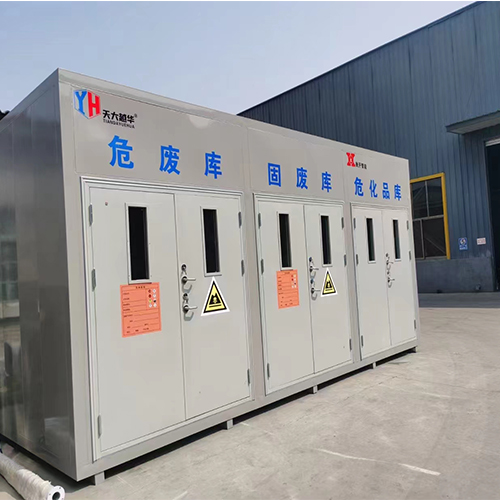
- 存放固态 / 半固态危废时,设置收料托盘,用于收集泄漏物料;- 仓库内设置防泄漏收集导流沟渠,沟渠连接至收集池,收集池容积不低于 “最大容器容量” 或 “危废储量 1/5” 中的较大值;- 易产生粉尘、VOCs、酸雾的危废,必须装入闭口容器 / 包装物内贮存,废气排放需符合《大气污染物综合排放标准》(GB16297)和《挥发性有机物无组织排放控制标准》(GB37822)。应急与安全管理:- 仓库内及出入口处设置 24 小时视频监控,确保无死角;- 配备安全照明(灯具、线路需满足防爆要求);- 按风险等级配备对应应急物资(如防腐蚀手套、护目镜、吸附棉、灭火器等),存放于应急物资柜,定期检查补充;- 空包装桶 / 容器需放在卡板上,堆叠整齐并缠绕拉伸膜固定,张贴危废二维码标签,避免二次污染。
-When storing solid/semi-solid hazardous waste, set up a receiving tray to collect leaked materials; -Set up leak proof collection and diversion channels in the warehouse, which are connected to collection tanks with a capacity not less than the larger of "maximum container capacity" or "hazardous waste storage capacity 1/5"; -Easy to generate dust VOCs、 The hazardous waste of acid mist must be stored in closed containers/packaging materials, and the exhaust emissions must comply with the Comprehensive Emission Standards for Air Pollutants (GB16297) and the Unorganized Emission Control Standards for Volatile Organic Compounds (GB37822). Emergency and safety management: Set up 24-hour video surveillance in the warehouse and at entrances and exits to ensure no blind spots; -Equipped with safety lighting (lamps and circuits must meet explosion-proof requirements); -Equip corresponding emergency supplies (such as anti-corrosion gloves, goggles, absorbent cotton, fire extinguishers, etc.) according to the risk level, store them in emergency supply cabinets, and regularly inspect and replenish them; -Empty packaging drums/containers should be placed on pallets, stacked neatly and secured with stretch film, and labeled with hazardous waste QR codes to avoid secondary pollution.
2. 标识与标签管理
2. Identification and label management
(1)危险废物标签:附着于容器 / 包装物内容要素(缺一不可):废物名称、类别代码(依据《国家危险废物名录》)、危险特性标识(腐蚀性 / 毒性 / 易燃性 / 反应性)、主要 / 有害成分、产生单位及联系人、数字识别码(唯一追溯编码)、二维码、产生日期与重量、注意事项。设置要求:- 位置:容器明显可见处(箱类端面 / 侧面、桶类桶身 / 桶盖、袋类表面),避免遮挡或污染;- 尺寸:按容积分级 ——≤50L 用 100×100mm、>50~≤450L 用 150×150mm、>450L 用 200×200mm;- 材质:防水耐用(如不干胶覆膜、塑封);- 特殊情形:无包装危废需设置柱式标志牌替代标签。
(1) Hazardous waste label: attached to the content elements of the container/packaging (indispensable): waste name, category code (based on the National Hazardous Waste List), hazardous characteristic identification (corrosive/toxic/flammable/reactive), main/harmful components, production unit and contact person, digital identification code (unique traceability code), QR code, production date and weight, precautions. Setting requirements: - Location: Clearly visible parts of the container (box end face/side, barrel body/lid, bag surface), avoiding obstruction or contamination; -Size: Classified by volume - ≤ 50L uses 100 × 100mm,>50~≤ 450L uses 150 × 150mm,>450L uses 200 × 200mm; - Material: Waterproof and durable (such as adhesive film, plastic sealing); -Special circumstances: Unpackaged hazardous waste requires column type signs to replace labels.
(2)贮存分区标志:置于设施内部,可视化管理制作要求:- 背景色:黄色(RGB255,255,0)或橙色(RGB255,150,0),字体为黑体,“危险废物贮存分区标志” 字样加粗居中;- 尺寸:按观察距离确定(见下表)设置细则:- 分区依据:按危废类别、形态及相容性划分,避免不相容危废混存(如 HW08 废机油与 HW12 废油漆渣分开);- 位置:每个分区入口处的通道、墙壁或栏杆等易观察位置;- 更新:随贮存危废种类变化动态调整标志内容。
(2) Storage zone sign: placed inside the facility, visual management production requirements: - Background color: yellow (RGB255255,0) or orange (RGB255150,0), font is in bold, and the words "Hazardous Waste Storage Zone Sign" are bolded and centered; -Size: determined by observation distance (see table below) Setting rules: - Zoning basis: divided by hazardous waste category, form, and compatibility to avoid incompatible hazardous waste mixing (such as separating HW08 waste engine oil from HW12 waste oil paint residue); -Location: easily observable locations such as passages, walls, or railings at the entrance of each partition; -Update: Dynamically adjust the content of the label according to changes in the type of hazardous waste stored.
3. 台账与追溯管理建立贮存台账:
3. Establish a storage ledger for ledger and traceability management:
通过 “实验室综合管理平台” 或纸质台账,如实记录危废 “入库 - 贮存 - 出库” 全流程,内容包括:废物名称、类别代码、重量、产生日期、贮存位置、出库去向(如转移至处置单位)、经办人等;信息化追溯:所有危废容器张贴二维码标签,扫码可查询台账信息,实现 “一物一码” 追溯;台账保存:至少保存 5 年,以备监管部门核查。
Through the "Laboratory Comprehensive Management Platform" or paper ledger, truthfully record the entire process of hazardous waste "inbound storage outbound", including waste name, category code, weight, generation date, storage location, outbound destination (such as transfer to disposal unit), handler, etc; Information traceability: All hazardous waste containers are labeled with QR codes, which can be scanned to query ledger information and achieve "one item, one code" traceability; Record keeping: Keep for at least 5 years for regulatory authorities to verify.
4. 特殊管理要求禁止混存:
4. Special management requirements prohibit mixing:
不相容危废(如酸性与碱性危废、易燃与氧化性危废)必须分区隔离,严禁混存;- 贮存时限:一般危废贮存时限不超过 1 年,确需延长的需向当地生态环境部门申请;- 定期检查:每日巡查贮存设施是否破损、泄漏,每周检查应急物资是否完好,每月核对台账与实际贮存危废是否一致,发现问题及时整改。
Incompatible hazardous waste (such as acidic and alkaline hazardous waste, flammable and oxidizing hazardous waste) must be segregated and strictly prohibited from being stored together; -Storage time limit: Generally, the storage time limit for hazardous waste should not exceed one year. If an extension is necessary, an application must be made to the local ecological and environmental department; -Regular inspection: Daily inspection of storage facilities for damage and leakage, weekly inspection of emergency supplies for integrity, monthly verification of ledger and actual storage of hazardous waste for consistency, and timely rectification of any problems found.
地址

服务热线

邮箱


截屏,微信识别二维码