地图 - 热线
15392885678
地图 - 热线
- 服务热线 - 15392885678 15069779222
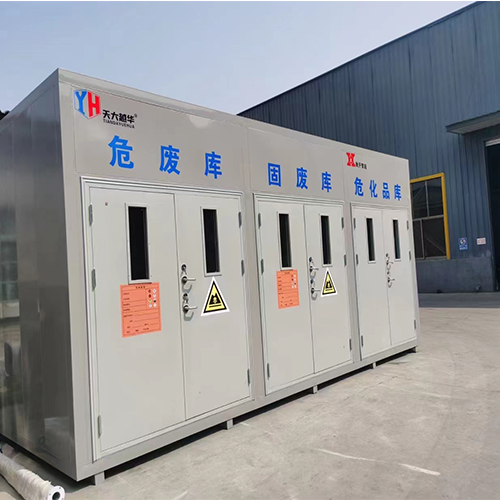
产废企业建危废暂存间,大多知道要防雨、防渗、防泄漏。地面做了环氧地坪,门口砌了围堰,墙上挂了标识牌。但环保检查一来,还是被挑出一堆问题。问题往往不在硬件,在分区和台账这两个软环节上。
Most waste producing enterprises know to build hazardous waste temporary storage rooms to prevent rain, seepage, and leakage. The ground is covered with epoxy flooring, a cofferdam is built at the entrance, and signs are hung on the walls. But after the environmental inspection, a bunch of problems were still picked out. The problem often lies not in the hardware, but in the two software links of partitioning and ledger.
分区不是把不同废物分开放就行。
Partitioning is not enough to separate different waste materials.
危险废物按特性分很多类:腐蚀性、毒性、易燃性、反应性、感染性。不同类别的废物混放,可能发生化学反应——比如废酸和废碱放一起会中和放热,氧化剂和还原剂接触可能起火。暂存间内部需要按废物类别划分区域,每个区域有明确的边界和标识。液态废物和固态废物要分开,液态的要放在托盘或围堰内,防止泄漏后扩散。不相容的废物之间要有物理隔断,不能只靠"放远一点"。
Hazardous waste can be classified into many types based on their characteristics: corrosive, toxic, flammable, reactive, and infectious. Mixing different types of waste may lead to chemical reactions - for example, waste acid and waste alkali combined can neutralize and release heat, and contact between oxidants and reducing agents may cause fires. The temporary storage room needs to be divided into areas according to waste categories, with clear boundaries and markings for each area. Liquid waste and solid waste should be separated, and liquid waste should be placed in trays or enclosures to prevent leakage and diffusion. There should be physical barriers between incompatible waste, not just relying on 'placing it further away'.
台账是非常容易被查的地方。
The ledger is the easiest place to check.
危险废物管理台账要求记录废物的种类、代码、数量、来源、去向、交接时间、经办人等信息。很多企业的台账是"补"出来的——平时不记,检查前突击填。这种台账经不起推敲:重量对不上、时间逻辑混乱、签字笔迹雷同。规范的台账应该是产生即记录、转移即更新。现在不少地方推行电子台账,通过系统实时记录、自动生成报表,比手工填更可靠,也更容易通过检查。
The hazardous waste management ledger requires recording information such as the type, code, quantity, source, destination, handover time, and handler of the waste. Many companies' ledgers are 'supplemented' - they are not usually recorded, but filled in suddenly before inspection. This ledger cannot withstand scrutiny: the weight does not match, the time logic is chaotic, and the signature handwriting is identical. A standardized ledger should be generated and recorded, transferred and updated at the same time. Nowadays, many places are implementing electronic ledgers, which are more reliable and easier to check than manual filling through real-time system recording and automatic report generation.
标识标签的细节,检查时逐项对照。
Identify the details of the label and compare them item by item during inspection.
每个贮存容器上都要贴危险废物标签,标明废物名称、类别、代码、危险特性、产生单位、日期等信息。标签不能手写,要打印或印刷,防水防脱落。暂存间门口要有警示标识和危险废物贮存设施标识牌。这些细节看着小,但检查时是逐项对照的,缺一项就是一个问题。
Each storage container must be labeled with a hazardous waste label, indicating the name, category, code, hazardous characteristics, production unit, date, and other information of the waste. Labels cannot be handwritten, they need to be printed or printed, waterproof and anti shedding. There should be warning signs and hazardous waste storage facility signs at the entrance of the temporary storage room. These details may seem small, but they are checked item by item, and missing one is a problem.
暂存间的防渗和围堰,有具体的标准。
The anti-seepage and cofferdam of the temporary storage room have specific standards.
地面防渗层的渗透系数要满足要求,通常用高密度聚乙烯膜或环氧地坪。围堰的容积要能容纳非常大单个容器的泄漏量,或者总贮存量的五分之一(取较大值)。围堰内不能有排水口,万一泄漏,液体要能全部截留在围堰内。这些参数在《危险废物贮存污染控制标准》里有明确规定,建暂存间之前应该对照标准逐项确认。
The permeability coefficient of the ground anti-seepage layer should meet the requirements, usually using high-density polyethylene film or epoxy flooring. The capacity of the cofferdam should be able to accommodate the maximum leakage of a single container, or one-fifth of the total storage capacity (whichever is greater). There should be no drainage outlet inside the cofferdam. In case of leakage, the liquid should be completely trapped inside the cofferdam. These parameters are clearly specified in the "Pollution Control Standards for Hazardous Waste Storage", and should be confirmed item by item against the standards before building a temporary storage room.
暂存时间也有硬约束。
There are also hard constraints on the temporary storage time.
危险废物在暂存间内的贮存时间通常不超过一年。超过一年需要延长贮存期限的,要报环保部门批准。这条规定意味着企业不能把暂存间当"仓库"用,废物产生后要及时安排转移处置。转移时还要执行电子转移联单制度,从产生到处置的全链条可追溯。
The storage time of hazardous waste in the temporary storage room usually does not exceed one year. If the storage period needs to be extended beyond one year, approval from the environmental protection department must be obtained. This regulation means that companies cannot use temporary storage rooms as "warehouses" and must arrange for timely transfer and disposal of waste generated. When transferring, the electronic transfer manifest system must also be implemented, and the entire chain from generation to disposal can be traced.
危废暂存间的逻辑很清晰:分区按特性隔开,液态固态分离;台账产生即记录,别等检查前补;标识标签打印规范,逐项对照标准;防渗和围堰按规范参数建;贮存时间不超过一年,及时转移。硬件建好了只是第一步,软环节管住了,检查才过得去。
The logic of the hazardous waste temporary storage room is very clear: partitions are separated by characteristics, and liquid and solid phases are separated; Record the ledger as soon as it is generated, don't make up for it before inspection; Printing specifications for identification labels, cross referencing standards item by item; Construct anti-seepage and cofferdam according to standard parameters; Store for no more than one year and transfer promptly. Once the hardware is built, it's just the first step. Only by controlling the software components can the inspection pass.
地址

服务热线

邮箱


截屏,微信识别二维码