地图 - 热线
15392885678
地图 - 热线
- 服务热线 - 15392885678 15069779222
沸石转轮配CO催化燃烧,是低浓度大风量VOCs治理的常见方案。但遇到含硅、含硫、含卤素的废气,CO就有点扛不住了——催化剂中毒是硬伤。这时候需要换沸石转轮+RTO蓄热式热氧化。
Zeolite rotary wheel combined with CO catalytic combustion is a common solution for the treatment of low concentration and high air volume VOCs. But when encountering exhaust gases containing silicon, sulfur, and halogens, CO is a bit overwhelmed - catalyst poisoning is a hard injury. At this point, it is necessary to replace the zeolite wheel with RTO regenerative thermal oxidation.
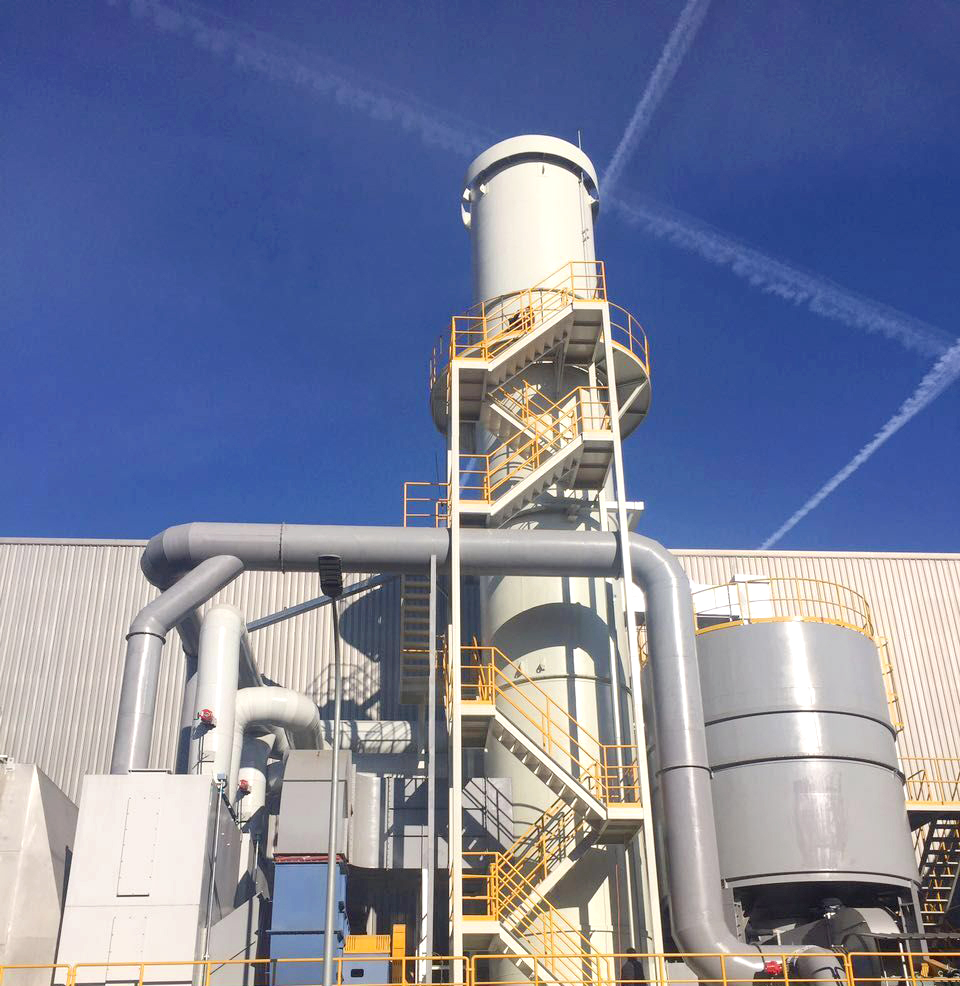
RTO和CO非常核心的区别:一个靠催化剂,一个靠温度。
The core difference between RTO and CO is that one relies on catalysts and the other relies on temperature.
CO催化燃烧的工作温度在300-400℃,靠催化剂降低反应活化能。优点是能耗低、设备紧凑。缺点是催化剂怕中毒——硅氧烷燃烧后生成的二氧化硅会覆盖催化剂表面,硫化物和卤素也会让催化剂失活。一旦中毒,更换催化剂的成本不低,而且停机时间长。
The working temperature of CO catalytic combustion is between 300-400 ℃, and the activation energy of the reaction is reduced by the catalyst. The advantages are low energy consumption and compact equipment. The disadvantage is that the catalyst is afraid of poisoning - the silicon dioxide generated after the combustion of siloxanes will cover the surface of the catalyst, and sulfides and halogens will also deactivate the catalyst. Once poisoned, the cost of replacing the catalyst is not low, and the downtime is long.
RTO不依赖催化剂,靠850℃左右的高温直接把有机物氧化分解。这个温度下,硅、硫、卤素这些“催化剂杀手”统统被烧掉,不存在中毒问题。对于喷涂、化工、制药这些废气成分复杂的行业,RTO的适应性明显更强。
RTO does not rely on catalysts and directly oxidizes and decomposes organic matter at high temperatures around 850 ℃. At this temperature, all the "catalyst killers" such as silicon, sulfur, and halogens are burned off, and there is no poisoning problem. For industries with complex waste gas components such as spraying, chemical, and pharmaceutical industries, RTO has significantly stronger adaptability.
多花的钱,省在三个地方。
The extra money is saved in three places.
第一,省在蓄热体上。 RTO的核心是蓄热陶瓷。废气进入前先经过蓄热体预热,氧化后的高温气体再把热量留在蓄热体里,热回收效率可以做到95%以上。当废气浓度达到1500mg/m?左右时,RTO基本可以自持运行,不需要额外补燃料。浓度更高时还能回收余热。CO的热回收效率通常在90%左右,差距看着不大,但长期运行的燃料消耗差距会拉大。
Firstly, save on the heat storage body. The core of RTO is thermal storage ceramics. Before entering, the exhaust gas is preheated by the heat storage body, and the high-temperature gas after oxidation retains the heat in the heat storage body. The heat recovery efficiency can reach over 95%. When the concentration of exhaust gas reaches 1500mg/m? When left or right, RTO can operate on its own without the need for additional fuel. At higher concentrations, waste heat can also be recovered. The heat recovery efficiency of CO is usually around 90%, and the difference may not seem significant, but the difference in fuel consumption during long-term operation will widen.
第二,省在维护上。 CO的催化剂需要定期检测活性,中毒后要更换,这是一笔持续支出。RTO的蓄热陶瓷寿命长得多,正常使用五到八年不需要更换,日常维护主要是检查阀门切换和燃烧器状态。从全生命周期成本算,RTO的维护费用更可控。
Secondly, the province focuses on maintenance. The catalyst for CO needs to be regularly tested for activity and replaced after poisoning, which is a continuous expense. RTO's thermal storage ceramics have a much longer lifespan and do not require replacement for five to eight years of normal use. Daily maintenance mainly involves checking valve switching and burner status. From the perspective of full lifecycle cost, the maintenance cost of RTO is more controllable.
第三,省在停机损失上。 催化剂中毒导致的非计划停机,对连续生产的工厂来说损失可能比设备本身还大。RTO不存在催化剂中毒问题,运行稳定性更高,非计划停机的风险大幅降低。
Thirdly, save on downtime losses. Unplanned shutdowns caused by catalyst poisoning may result in losses greater than the equipment itself for factories engaged in continuous production. RTO does not have catalyst poisoning issues, has higher operational stability, and significantly reduces the risk of unplanned shutdowns.
什么场景选CO,什么场景选RTO?
Which scenario choose CO and which scenario choose RTO?
废气成分单一、不含催化剂毒物、浓度稳定的场景,CO的初始投资低、能耗低,是更经济的选择。废气含硅、含硫、含卤素、成分复杂多变的场景,RTO虽然初始投资高一些,但长期运行更稳定、更省心。沸石转轮负责浓缩,浓缩后的高浓度废气送进RTO氧化,整套系统的净化效率可以稳定做到95%以上。
The scenario where the exhaust gas has a single component, no catalyst toxins, and stable concentration, with low initial investment and energy consumption of CO, is a more economical choice. In scenarios where exhaust gas contains silicon, sulfur, halogens, and complex and variable components, RTO, although requiring higher initial investment, is more stable and worry free in long-term operation. The zeolite wheel is responsible for concentration, and the concentrated high concentration exhaust gas is sent to RTO oxidation. The purification efficiency of the entire system can be stabilized at over 95%.
沸石转轮+RTO的选型逻辑很清晰:先看废气里有没有催化剂毒物,有就选RTO;再看浓度和风量,浓度够高RTO能自持运行;非常后算全生命周期成本,初始投资只是其中一项。
The selection logic of zeolite wheel+RTO is very clear: first check whether there are catalyst toxins in the exhaust gas, and if there are, choose RTO; Looking at the concentration and air volume again, if the concentration is high enough, RTO can operate on its own; Finally, the total lifecycle cost is calculated, and the initial investment is just one of them.
本文由沸石转轮+RTO友情奉献。更多有关的知识请点击:http://www.tdyhhb.com 我们将会对您提出的疑问进行详细的解答,欢迎您登录网站留言。
This article is contributed by the zeolite wheel and RTO friendship. For more information, please click: http://www.tdyhhb.com We will provide detailed answers to your questions. You are welcome to log in to our website and leave a message.
地址

服务热线

邮箱


截屏,微信识别二维码